
The exchange of women is a shorthand for expressing that the social relations of the kinship system specify that men have certain rights in female kin and that women do not have the same rights in their male kin… [It is] a system in which women do not have full rights to themselves.
Gayle rubin
A million rupees question has been, Is Matriarchy opposite to Patriarchy? The answer is No. The next organic question will be, how are they both not opposite to each other conceptually? Patriarchy represents “Hierarchy”, it is a social system in which positions of dominance and privilege are primarily held by men. But does that mean Patriarchy enables all men to thrive and be on top of the hierarchy? The answer is No because today the pressure is built on a Man to be educated, be successful, be financially stable, be a leader and head the family. All these responsibilities are phased out in such a way that the pressure is constantly put on him by their own family. Because Patriarchy only exploits anyone who is one line below the other irrespective of gender.
Before going into the details of Matriarchy, 20th-century Western historians such as Gerda Lerner have roundly declared that “no matriarchal society has ever existed” so we only had or still have Matrilineal Societies. Wherein the term itself shows that it is not “Hierarchical” rather it is “Leaning” or in other words interdependent on each other.
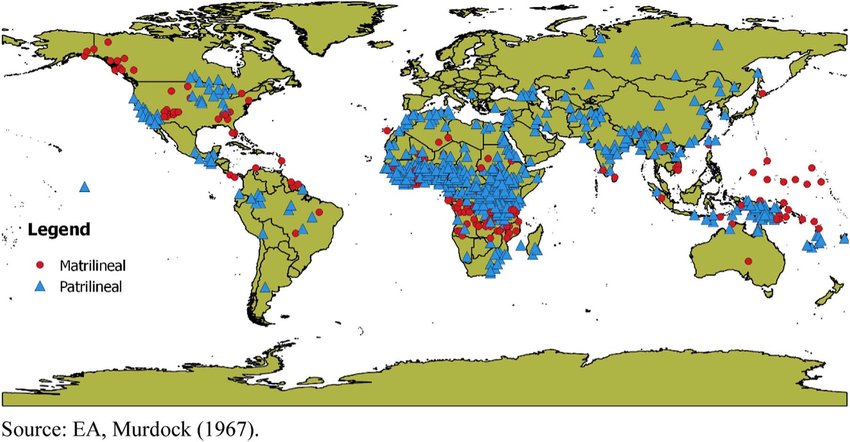
Matrilineal Society is a circle wherein the mother is in epicentre and the Children belong to everyone. Angela Saini in her book The Patriarchs talks about different types of societies which center around the mother.
- Matrilineal societies– That is, societies in which descent is traced through the female rather than the male line and property is often inherited in the same way.
- Matrilocal societies– A woman stays with or near her family after marriage and a man moves to where his wife’s family lives.
- Matricentric or Matrifocal societies– A woman is the head of the family household, but this does not necessarily extend to social governance.
Of course, the word matriarchy carries a slightly different meaning, in that it is connected to power. In popular usage, it conveys an idea of female domination – a mirror image of patriarchy – in which women have absolute authority over men and children.
A recent research drawing on decades-old studies in anthropology confirms there are at least 160 matrilineal communities in the world in nations such as India, Africa, Indonesia and the Americas. What is truly fascinating about the whole idea of matriarchy – as Saini points out – is that it is a very modern preoccupation.
Stories about Amazonian warriors, fiery goddesses and powerful queens can be traced back to ancient times, across cultures and continents. However the term “matriarchy” is largely the creation of mid-19th-century anthropological writing. It conspicuously appears at a time when Europeans – driven on by the dreams of conquest and “discovery” that marked the imperial project – reacted in shock as they encountered societies different from their own.
In 18th-century Kerala, for example, Europeans were baffled to encounter the descendants of the ancient Nairs living in tharavads – bustling joint households with a shared female ancestor – in which the rules of monogamous marriage and nuclear family didn’t apply. Sexuality was celebrated. Women were allowed more than one sexual partner, and fathers raised their sisters’ children rather than their own.
One Dutch traveller declared the Nairs to be the “most lecherous and unchast [sic] nation in all the Orient”.
So as in the Matrilineal society, while the responsibilities were shared yet the property remained with the mother. But this slowly changes over time when the tribes are taken over by the Men who established a hierarchy in the form of Sachems, War-Chiefs, Gentes and Tribal Councils. So in this phase, Mother has given way to father-right; increasing private wealth has thus made its first breach in the gentile constitution.
A second breach followed naturally from the first. After the introduction of father-right, the property of a rich heiress would have passed to her husband and thus into another gens on her marriage, but the foundation of all gentile law was now violated and in such a case the girl was not only permitted but ordered to marry within the gens, in order that her property should be retained for the gens thus female-line were excluded. As per the law of inheritance, the woman loses her agnatic rights on marriage and leaves her gens; neither she nor her children can inherit from her father or his brothers.

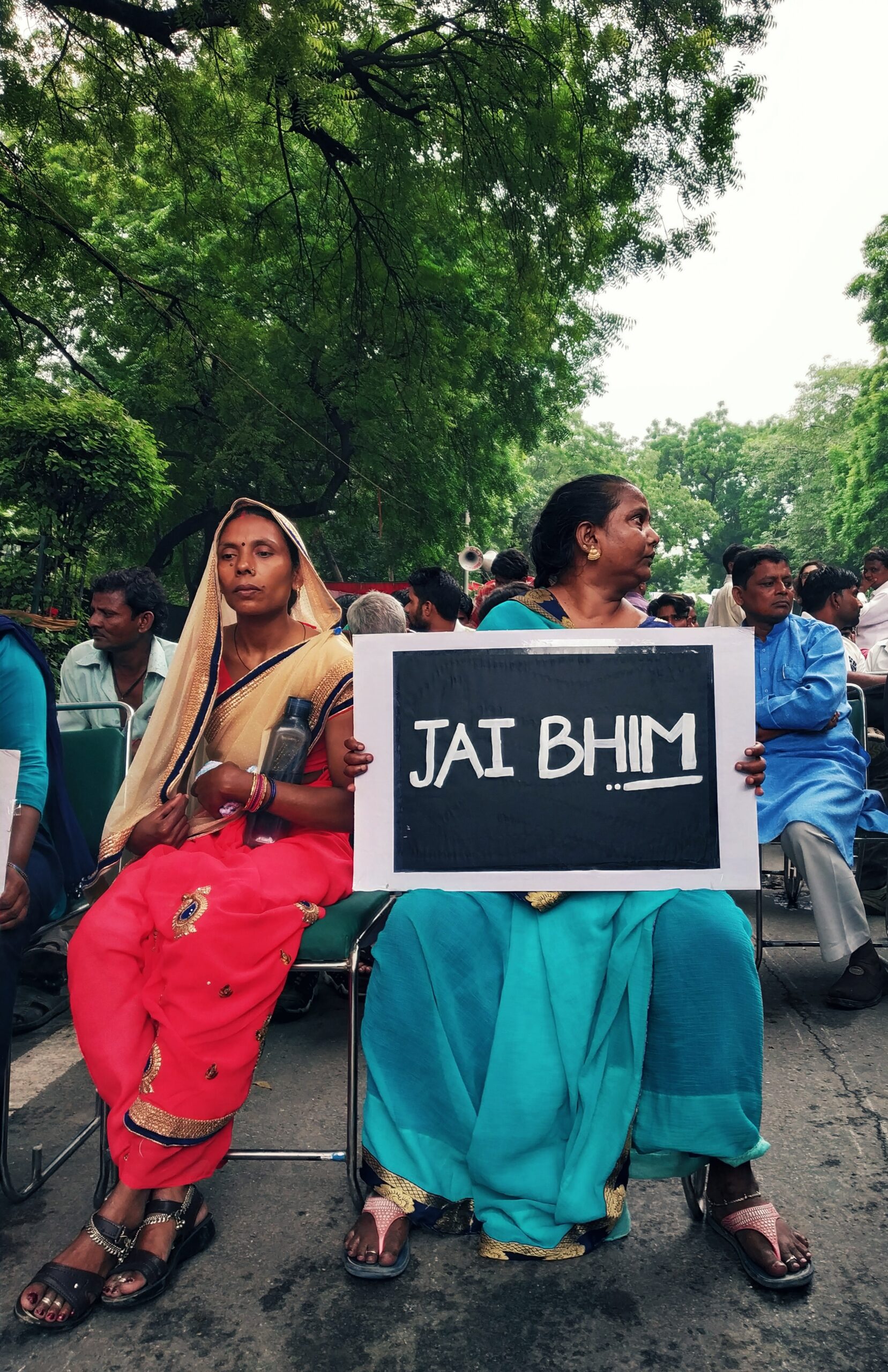
Property ownership has been historically significant in India, with land being a valuable asset. Property often determines an individual’s social and economic status. Inheritance of property plays a crucial role in maintaining family wealth and social standing. One of the key methods of preservation of property in India is Arranged Marriages within the same caste. Thus, Arranged Marriages can ensure that property remains within the caste or family, preventing its division or loss. But this is applicable in the case of the men in the family as in Indian society the woman gets married into a Man’s family. What happens when a girl marries into a family of a boy who belongs to the oppressed community? What happens when love blooms?
Is a girl able to get happily married to a man of her choice irrespective of Religion or Caste? The answer to this question is available in the accounts of Honour Killing. Honour killing is an act of murder by the family members. It is the crime committed by the members of a family thinking about purity of their caste and eradicating the dishonour brought by a family member just because they chose love over caste-based discrimination. The National Crimes Record Bureau’s report for 2020 revealed that 25 cases of “honour killing” were reported in the preceding year. But Evidence, an NGO run by Comrade Evidence Kathir revealed in November 2019 that as many as 195 known cases of honour killings were reported from Tamil Nadu alone in the past five years.
The real remedy for breaking caste is inter-marriage. Nothing else will serve as a solvent of caste.
Dr.B.R. Ambedkar
Unfortunately, honour killing is not a crime that can be deterred by existing laws. These laws deal with murder, not honour killing. While in today’s world, we should emphasise the rights of adults to choose partners without the consent of their families, castes, tribes, religious communities or clans, the practice of endogamy, marrying within one’s caste and maintaining property is deeply tied to the caste system, ensuring that property and social networks stay within the caste hence enabling the caste fanatics. The rise of violence against individuals involved in inter-caste marriages can be understood as a reaction to safeguarding their hegemony over women and the oppressed castes on the ladder of graded inequality. The honour killings exist all across the sub-castes. Hence the concept of graded inequality in the caste hierarchy remains relevant, along with the preservation of family property, caste purity and family honour. Thus the problem of the bounded nature of the circulation of women is explicitly tied to the formation and persistence of caste.
Caste Hegemony- One reason is that the caste-based organizations call for an offensive against inter-caste marriages to increase caste polarisation to mobilise caste solidarity to increase their vote bank consolidation. The perpetrators perceive the phenomenon where individuals dare to commit inter-caste love as resistance against caste oppression. Caste is a state of mind, as stated by Dr. Ambedkar is very relevant here.
Gender parity- Another reason is that a woman makes her own decision about her life choice in inter-caste love and marriage. It is perceived as a threat to endogamy and thereby the caste system itself. Here, the feudal, patriarchal caste system that considers a woman’s body as a gatekeeper of the so-called “honour” of the family/caste comes into play, where a relationship with an oppressed caste man is perceived to shatter the honour of the family/caste, thereby provocating the perpetrators to unleash an offensive against the individuals destroying life and property. In some cases, even if the father or family of the woman is silent, they are provoked to harm the couple or made to feel ashamed for shattering their honour which results in suicide.
This issue is connected with the notion of women as the property/chattel of men, who are devoid of exercising autonomy. Inter-caste marriages being considered a deviation from the endogamous arranged marriages is also perceived as a threat to their control over material wealth, which might be passed away from the caste network.
Therefore, both the reasons mentioned above are essential to understanding the crime of honour killing, where the caste-based organization utilize the prevalent casteist mindset of the people.

Control over Reproduction- We need to consider how reproduction is organized, and who controls the crucial resource of female sexuality. Class, Caste and gender are inextricably linked; they interact with and shape each other: the structure of Arranged marriage, sexuality, and reproduction is the fundamental basis of the caste system. It is also fundamental to the way inequality is sustained: the structure of marriage reproduces both class and caste inequality and thus the entire production system through its tightly controlled system of reproduction.
Property ownership- Some of the reasons which have enabled the inter-caste love between two individuals are the upward mobility of the oppressed castes, especially the Dalits, at least on a relative level, despite the persistence of asset inequality. This an be attributed to the opening of access to formal education since the British period. Also, industrialization and urbanisation rapidly changed agrarian relations to an extent, thereby changing the social relations between the caste groups, especially at the village level. This opened up opportunities for pursuing education, and jobs (overcoming the clutches of feudal landlords) and paved the way for social awareness and political sensitisation.
As a result, the social conditions increased the probability of a meeting or interaction between two adults from different caste groups, thereby leading to a relationship between them, especially ending in love and marriage.
The change in social relations has left the oppressor caste where there is no availability of both the labour class and oppressed castes over whom the former could express their dominance upon.
This challenged the status quo of the dominant castes in both cultural as well as economic spheres. This loss of privilege is what has been fuelling them toward increasing caste hegemony.
Economic Status- Another critical factor is the economic status of one individual plays a vital role. When the individual has a decent economic background, the possibility of this violence is comparatively less within the sub-castes in a community whereas, we don’t see the same picture when it comes to the involvement of a Dalit. In that case, the genetic purity/ caste hegemony becomes much more significant than the financial stability.
Women being torchbearers of patriarchy- Women’s practices in relation to food play a critical role in the hierarchical ordering of castes. The place of women as active agents and instructors in the arena of food and rituals also implies that women who command its repertoire of rules gain special respect.
Hence whether it is conforming to the upholding of family traditions, or maintaining the purity rules in the kitchen, Caste Hindu women who conform are honoured and respected; at the same time, they perpetuate caste and its restrictions in their everyday lives.
Women’s investment in the practice of the caste system is not confined to marriages according to the norms of their families and communities, or to maintaining the purity of the food and rituals, though both are related to the internal organization of the household and its reproduction and in maintaining its power in the economic and public domain.
In conclusion, we can see that the women’s movement has raised very pertinent questions on the inequality that exists between men and women in our society and has also taken up many crucial issues that impinge on women’s lives, access to productive resources, to the right to control their own bodies, and above all, to the violence women experience virtually from conception to death. Given that violence has been so central to the reproduction of patriarchy, it is significant that the women’s movement has not given into the violence inherent in the caste system to the violence in patriarchy.
As, we see the correlation between Women, Property and Caste, the only factor that is threatening the stronghold of patriarchy is the person having been born as a woman and as a Dalit. After all, hegemony of any community, in the patriarchal imagination, is premised on men’s ability to control “its” women and “protect” them from outsiders. Women and Dalits until the caste hegemony is broken within the patriarchial structure, will continue to be the casualty under its siege. Hence it is furthermore need of the hour for Women to come to the foreground, come into the market and claim their rightful share of the market and more.
References:
- Angela Saini, The Patriarchs How Men Came To Rule
- Alexandra Surowiec, Kate T. Snyder, Nicole Creanza, A worldwide view of matriliny: using cross-cultural analyses to shed light on human kinship systems- Published:15 July 2019 https://royalsocietypublishing.org/doi/10.1098/rstb.2018.0077
- Camilla Nelson, The Conversation: Friday essay: matrilineal societies exist around the world – it’s time to look beyond the patriarchy https://theconversation.com/friday-essay-matrilineal-societies-exist-around-the-world-its-time-to-look-beyond-the-patriarchy200825#:~:text=Although%20most%20dictionaries%20will%20tell,there%20are%20at%20least%20160
- Frederick Engels, Origins of the Family, Private Property, and the State
- The National Crimes Record Bureau’s report for 2020
- Enact law to stop honour killing: NGO, The Hindu (Nov. 22, 2019)
- Uma Chakravarti & Maithreyi Krishnaraj, Gendering Caste: Through a Feminist Lens
- Aisha Gill, Patriarchal Violence in the Name of “Honour”, 1 International Journal of Criminal Justice Sciences 2006
- Stalin Rajangam, Aanavak Kolaikalin Kaalam (Kalachuvadu Publications, 2016)
- Analysis of Caste-Based Honour Kullings with Special Reference to Tamil Nadu by Kavin Castro M
- Gayle Rubin, cited in Gerda Lerner, The Creation of Patriarchy
About the author
Kavitha Pandian

Kavitha Pandian is working in an IT company in the USA as a practice manager. She runs many initiatives including the Save Tamilnadu Farmer, Our Village Our Responsibility, and Adopt a Village and extends financial support and scholarship to underprivileged children for education, and betterment of rural life and has supported the people of Tamil Nadu during major natural disasters including Gaja and Covid. She has received many awards including ‘The Women Achievers Award’ by FeTNA, USA, in 2022. She also was felicitated by the District Collector, Virudhunagar during the 75th Independence Day celebrations, 2022, for her work towards infrastructure.

