The 16th of November 1860 is a historical day commemorating the arrival of Indian Indentured Labourers at Port Natal (our present-day Durban, South Africa).
On 12 th October, 1860, the Ship SS Truro left Madras with 342 Indentured Labourers, brought by the British Colony to Natal (now known as KwaZulu-Natal) to work on the sugar cane plantations and coal mines. The majority of these early immigrants were from South India, and most spoke Tamil. I am proud to say that I belong to the fourth generation of these pioneer Tamils of South Africa.
The other language groups include Telugu, Malayalam and Hindi. Being ordinary labourers, many of them were not literate, but were strong in religious beliefs and brought with them the worship of village deities. So strong were their beliefs that even to this day, many people, even those who cannot speak Tamil, stick to the religious practices of their great, great-grandparents from India.
Unfortunately, the same does not go for the language. The entire evolution of the Tamils in South Africa was the subject of many studies that make interesting reading, but I’ll limit myself to the progress and challenges faced by the advancement of the Tamil Language.
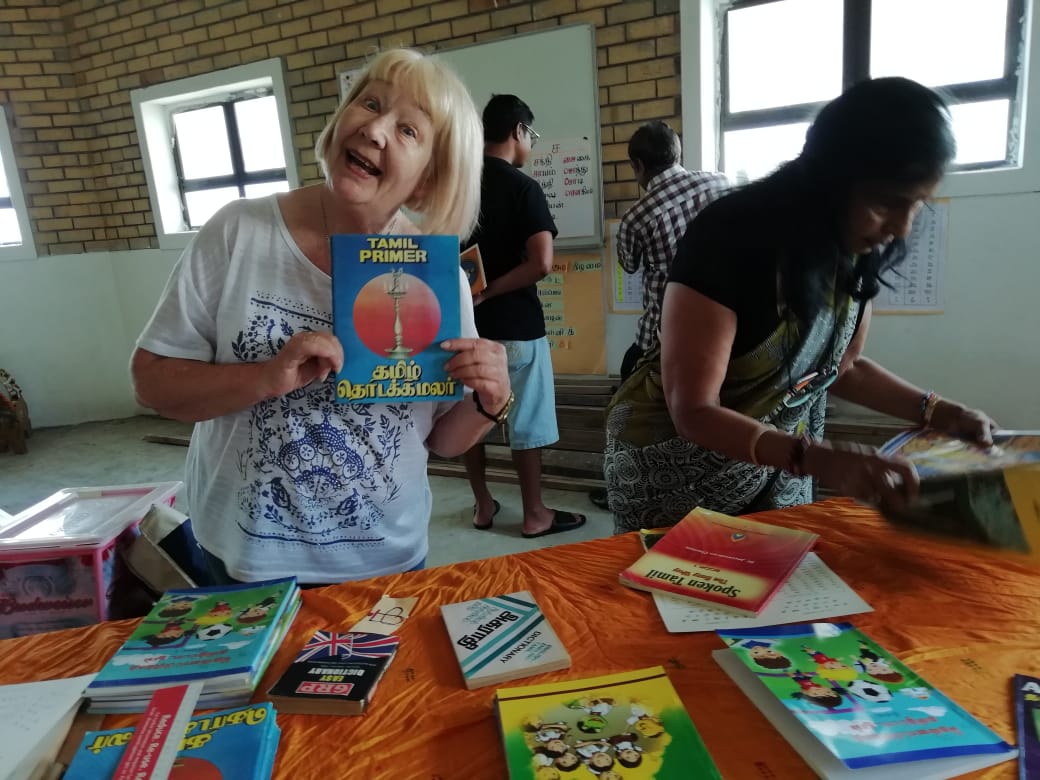
Compared to Singapore, Malaysia and other countries where Tamils settled, South Africa is unique in that the language is not spoken by the majority of people who call themselves Tamils. Research carried out by Mr Ganas Murugan in 1994 shows that most Tamils speak English at home as their home language. In Singapore, Malaysia and other countries where Tamilians settled, the Tamils speak and understand their language. Tamils in South Africa are unique in that the language is not spoken by the majority of people who call themselves Tamils. Every generation sees a greater deterioration in this aspect, in spite of attempts made by various organisations to ensure accurate statistics in the language; these are not available.
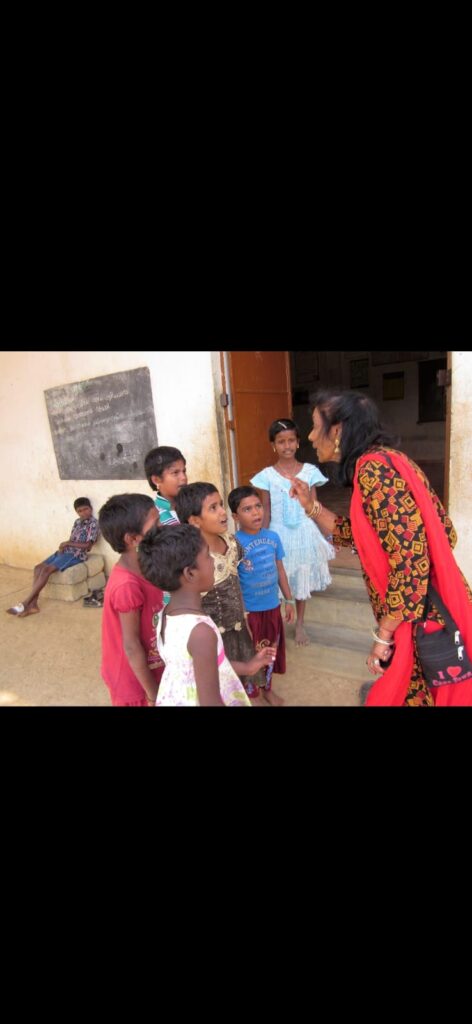
It could be estimated that less than twenty per cent of Tamils can speak the language frequently, and even less can read and write the language. There are many reasons why Tamil did not progress as a commonly spoken language.
- Although the Tamils who arrived in the 1860’s spoke the language at home, it was not the language of the workplace. They had to be fluent in English to obtain jobs. They had to learn other languages like Zulu and Afrikaans quite fluently, which is not the case with their own mother tongue.
2. Education of Tamils: From the 1950’s to about 1994, all Indians were not given priority by the colonial government in education. But they themselves took it upon themselves to build little structures, which were the early schools. Later, some became State-aided schools. The need to learn English to better their career prospects in other service industries, especially in hotel and catering, made parents emphasise the need to study English at the expense of Tamil.
3. The Tamil language flourished in the early days when people lived as joint families, and grandmas and grandpas often spoke to their children and grandchildren in Tamil, and they had to reply in Tamil. This gave way to nuclear families, and most parents spoke to their children in English as a language of choice. Many grandparents had to brush up on their English skills to cope with this new generation, and soon they, too, were speaking English only.
4. Tamil or any Indian language was not part of the School curriculum, and what little Tamil was learnt was done after school at Temples or privately. In the 1960s, Afrikaans was introduced in the Indian Primary Schools. Children were already learning English and Afrikaans as compulsory school languages, and a third language, the mother tongue, was not given priority. For a short time in history, during the Tri-cameral parliament, when Indian education came under the Indian Affairs Department, Indian languages were introduced in schools, but the time allocated was only ninety minutes a week, and it was not an examination subject. The consequences were obvious. Very few pupils continued with Tamil at the high school level.
An Indian languages Department was set up at the University of Durban – Westville, and SaivaPulaver Mr K.C. Gounden, a graduate of the University of Madras, was the first lecturer. Later, Dr S. Subramaniyan, from India, was head of the Tamil section. It did produce some positive results. Some students were able to graduate. Students who completed their degree in Tamil were able to graduate and obtain their BA degree in Tamil. When the ANC Government came into power in 1994, eleven languages received official status, but Tamil was not one of them. In fact, now our children have to learn English and Afrikaans or one of the African languages to compete for state jobs. Tamil was facing greater challenges than ever.
The future of the Tamil language looks bleak. However, since the new Government came into power, there were more cultural ties with India. We had many visits by cultural leaders and singers, and this promoted the language in a small but significant way. A few Seniors who were Tamil school teachers said that: The First NTVS (Natal Tamil Vedic Society) Eisteddfod was inaugurated in 1963 in the Durban City Hall, and that NTVS also inaugurated Tamil cultural gatherings in Durban that led to this first inaugurated Eisteddfod in August 1963. The South African Tamil Federation have been having Tamil Eisteddfod every year.
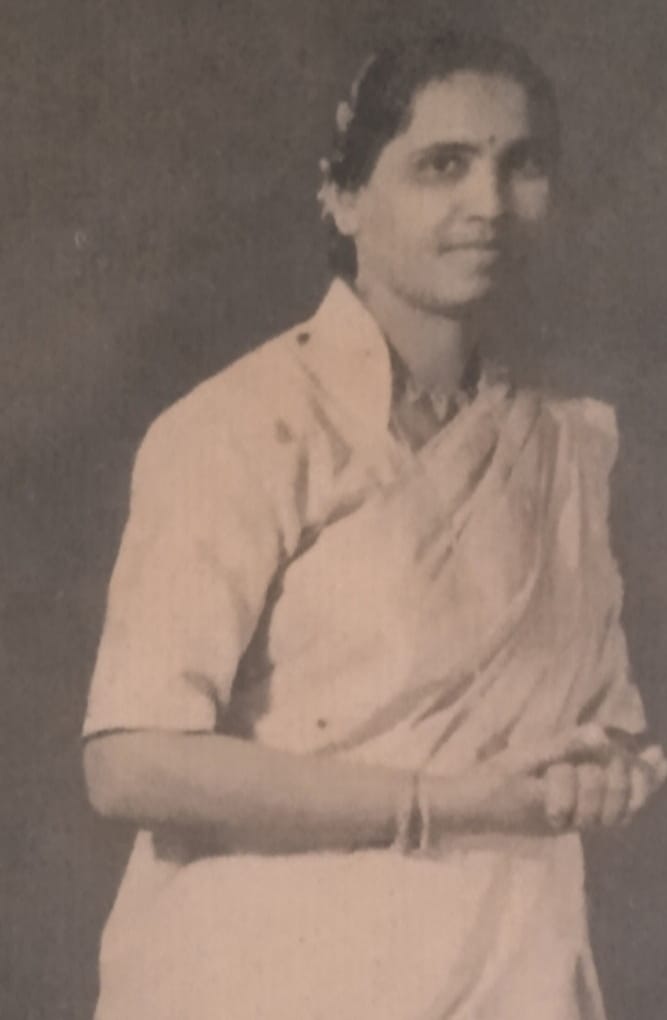
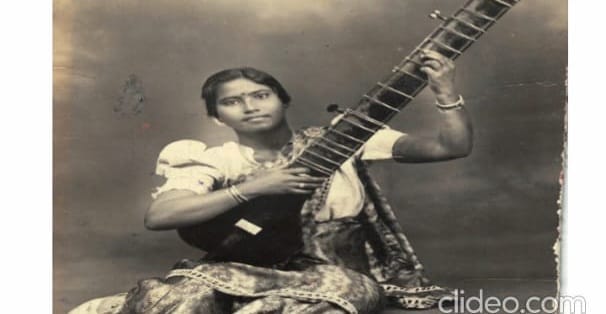
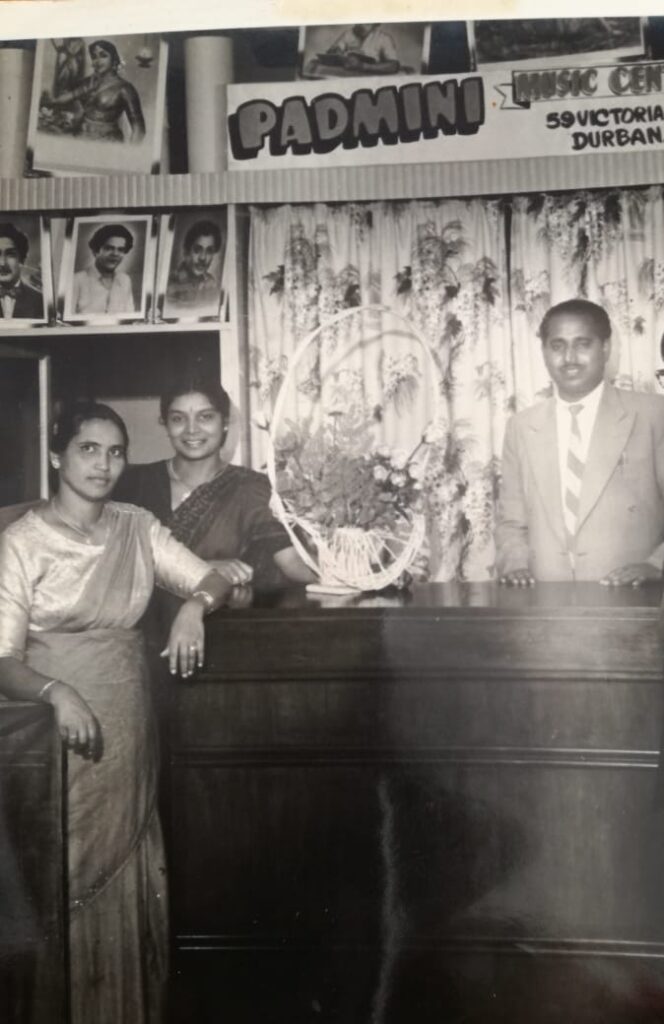
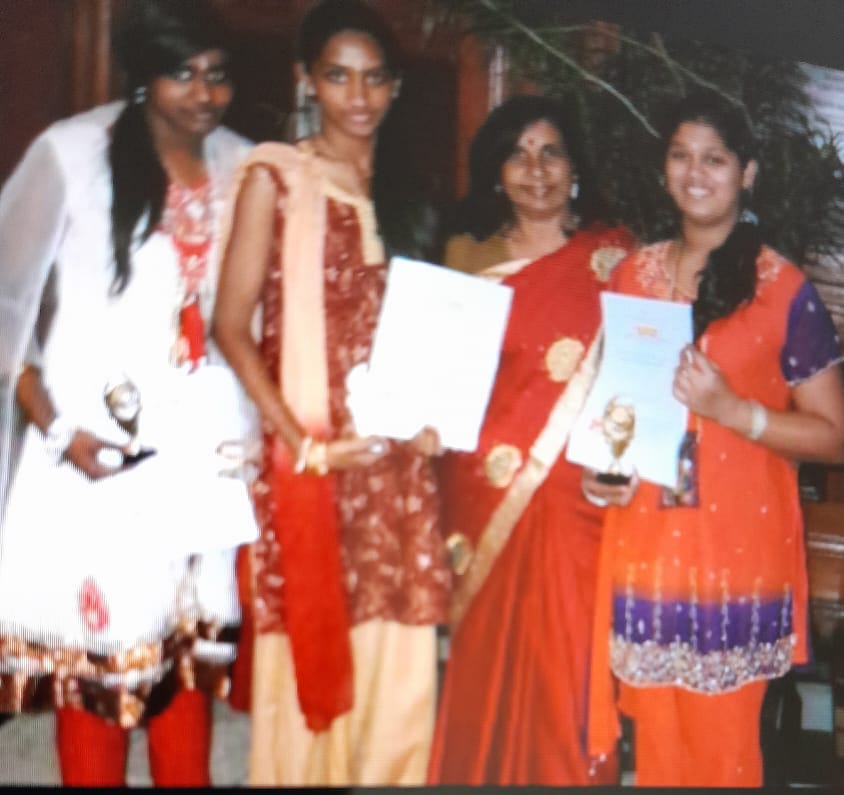
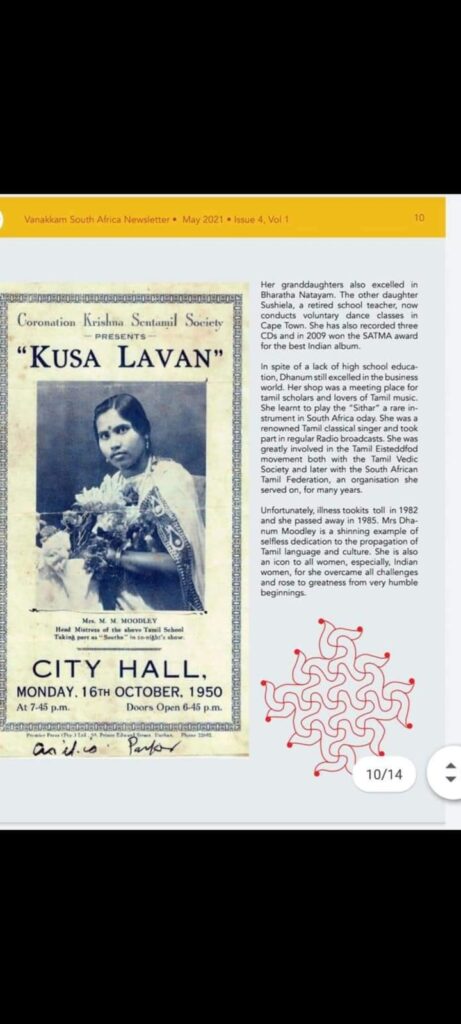
My Amma, a Tamil School teacher in Briardene Tamil, taught the children in the Coronation Krishna Sentamizh Padasalai in Briardene to take part in the Eisteddfods. I used to participate in the Eisteddfod also from an early age. We took part in proverbs and idioms “Sayals”, Aathisoodi, etc., singing, dancing, both Bharatha Natiyum folk dances, etc. When we moved to Cape Town, I even taught some children in Cape Town and took them to Durban to participate in the Eisteddfod. The children did well. The adults also took part in a choir, representing the Cape Town Adult Choir group in the Eisteddfod.
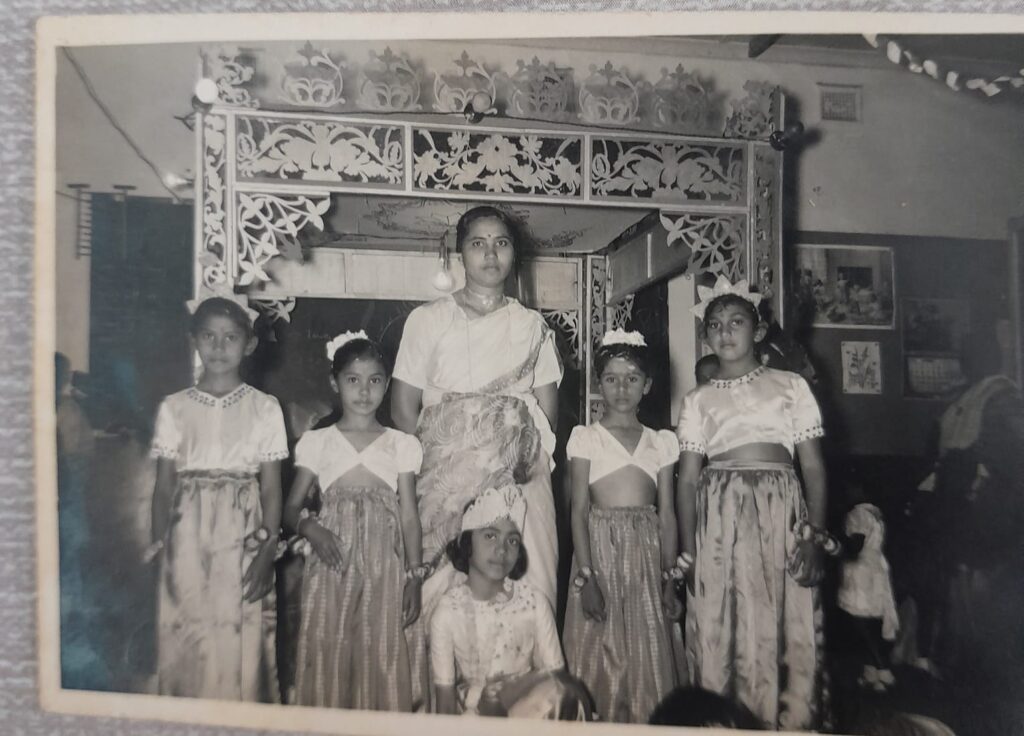
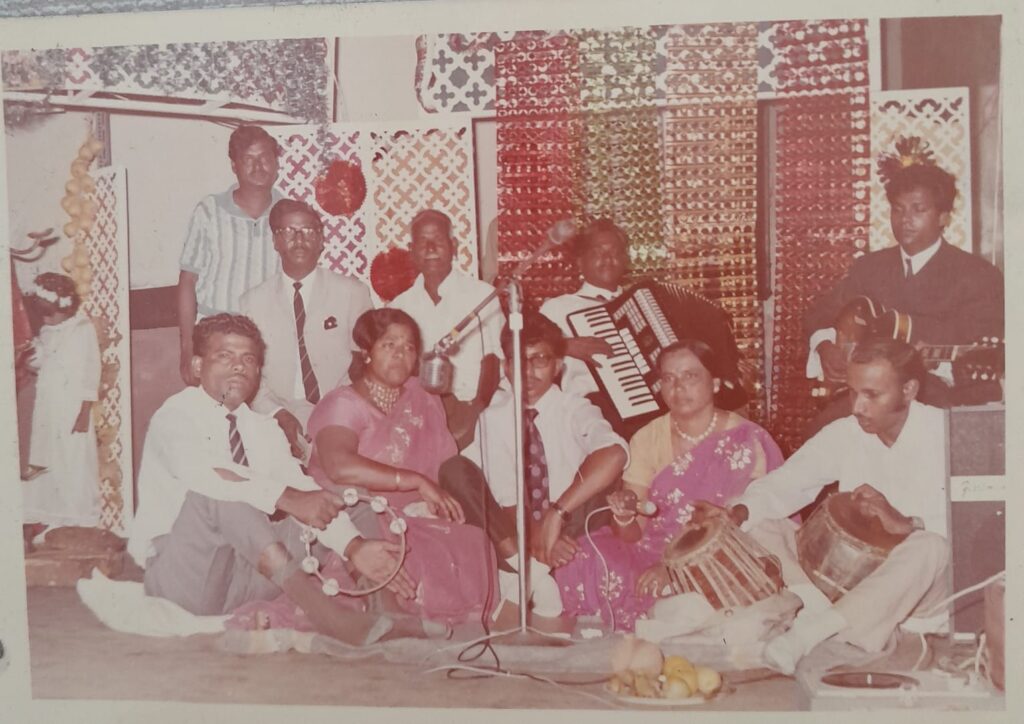
In Gauteng and especially in KwaZulu-Natal, Eisteddfods are organised by their Tamil Federations every year, and the finalists go to Durban or Gauteng, in which province the Eisteddfod Provincial Finals are held. In Cape Town, the population of Tamils are less, and people have to concentrate on having a fair knowledge of Afrikaans because the Afrikaans population is large, and we have to at least have some knowledge of Afrikaans if we want to apply for work. Most people living there speak Afrikaans, so people who come from other provinces of South Africa have some knowledge of Afrikaans. At least, now most people know and speak English. No matter wherever Tamils settled in South Africa, they never forgot their customs and traditions.
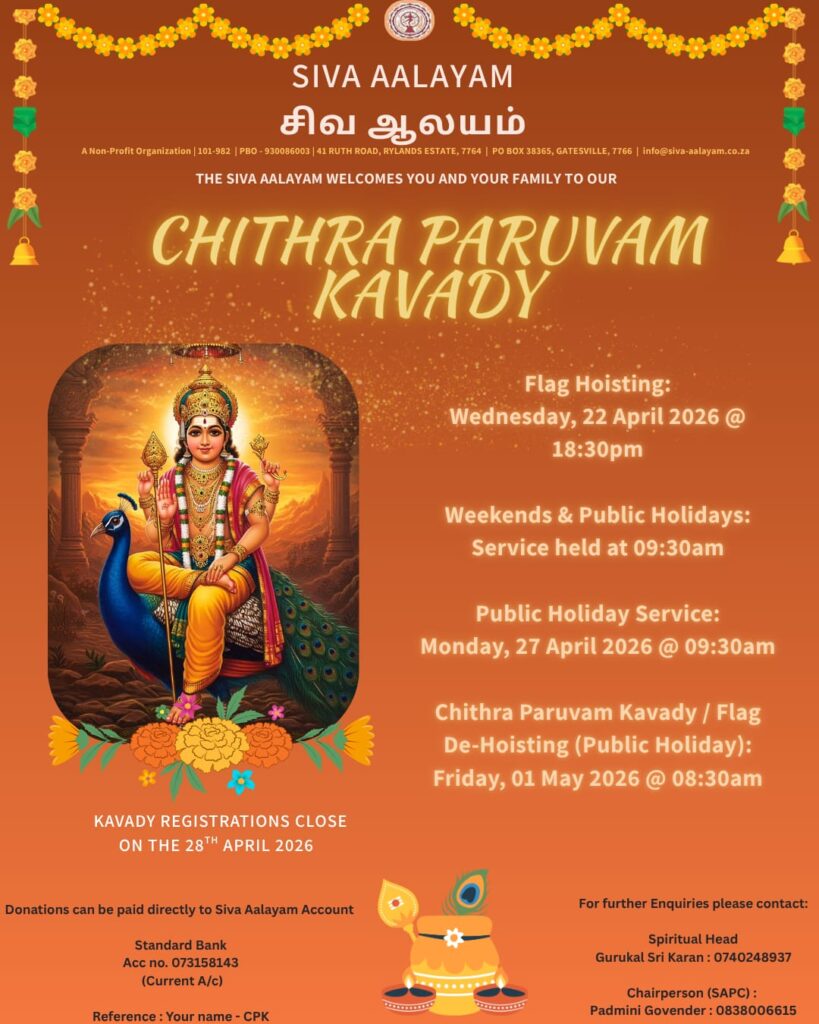
As soon as it’s the Tamil New Year, special Tamil calendars are printed highlighting all Tamil prayers and important events, for example, Navarathri, Kavady, Deepavali… The youngsters are very proud of our heritage, and we can be proud that our customs and traditions will never be forgotten and will forever be preserved and continued for as long as the Tamils are in South Africa.
About the Author – Sushiela Govender, Cape Town
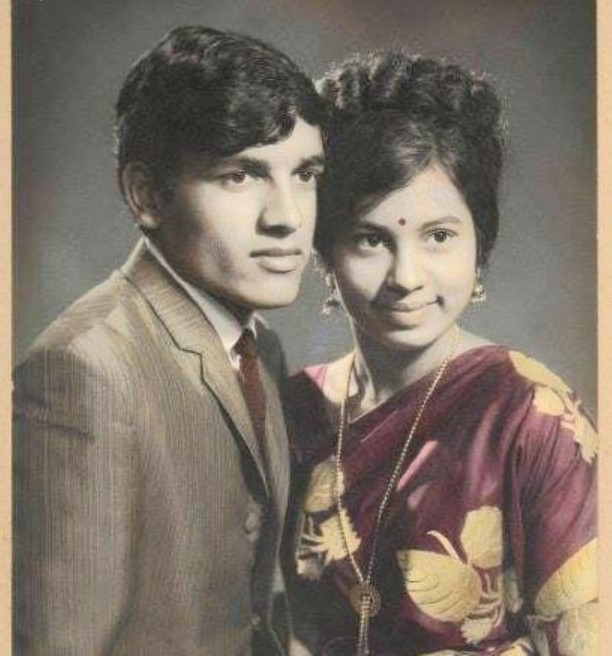
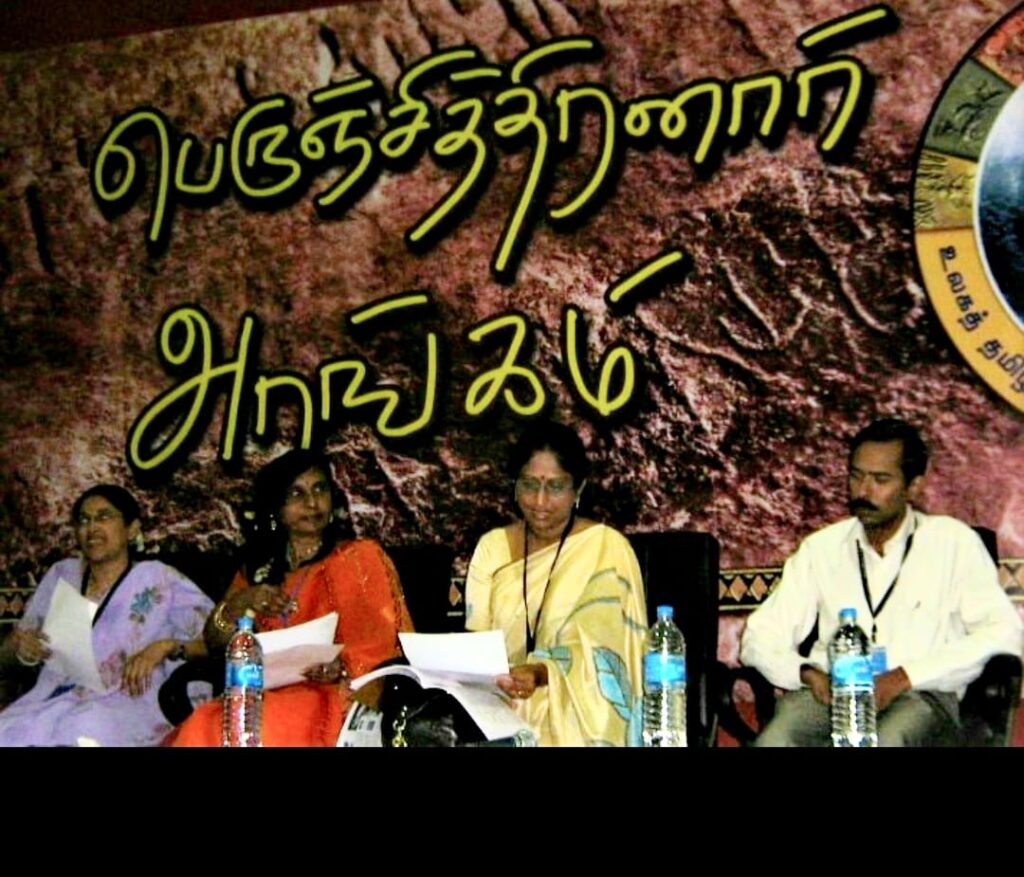
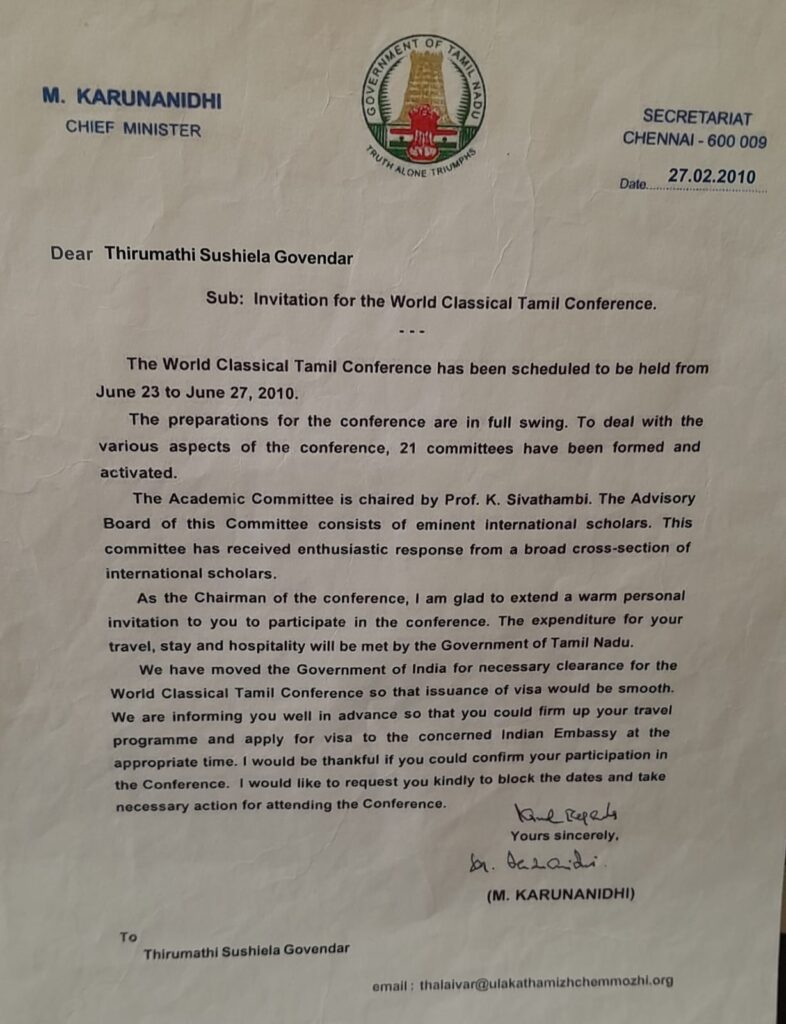
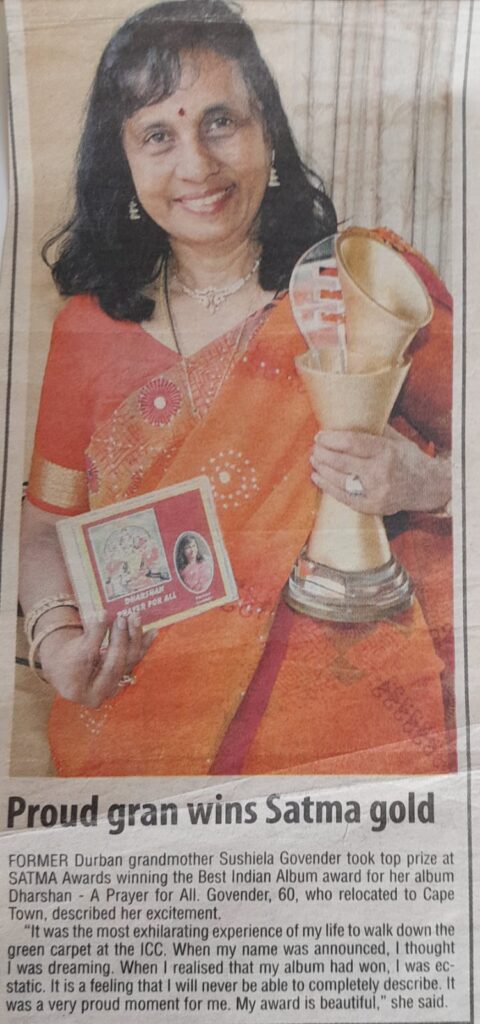
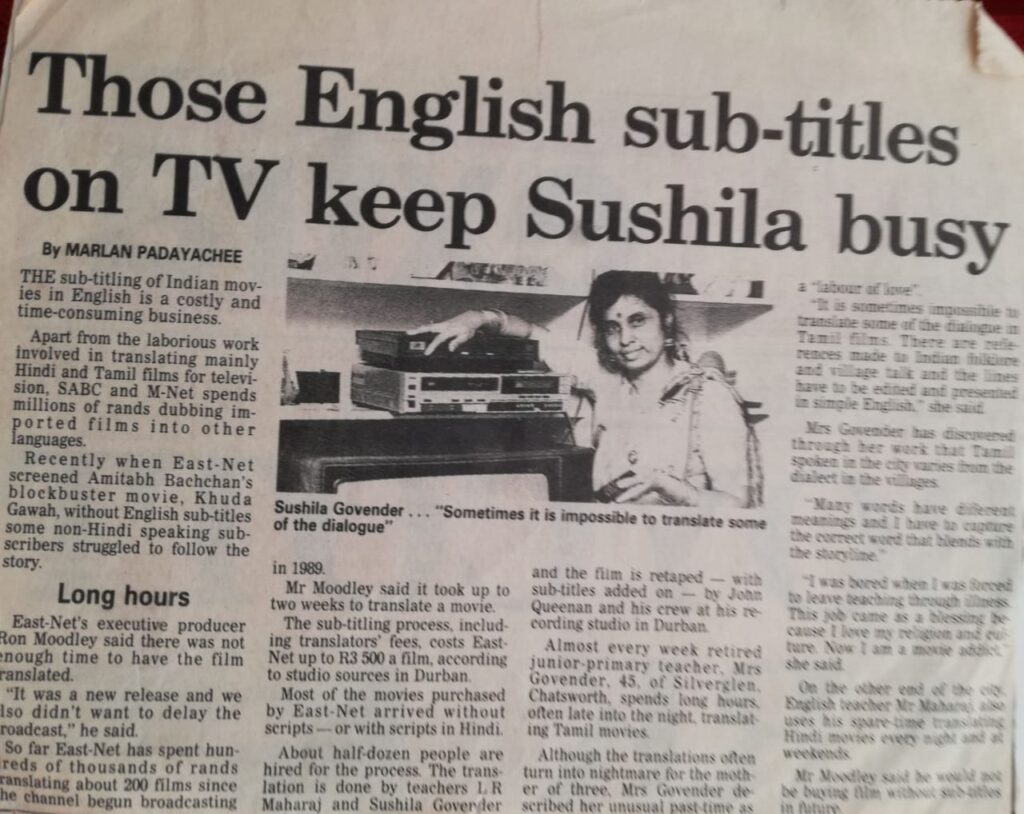
Born in Durban, SA into a Tamizh family and settled there a couple of generations back, Sushiela Govender won Best Indian Album at the South African Traditional Music Awards (Satma) held in Durban in 2009. Formerly of Malvern and now living in Cape Town, she is a retired school teacher with more than five decades of experience in the music industry. She has released the devotional CD Dharshan, A Prayer for All and another CD Anbumalai, which was released in 2003.